

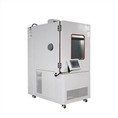


Products Description
Tensile testing refers to a method of orienting a test material or its polymer chains along an applied force, thereby improving the polymer's structure and mechanical properties.
Tensile Strength Instrument are primarily suitable for testing metal and non-metallic materials, such as rubber, plastics, wire and cable, optical fiber cables, seat belts, safety belts, leather belt composites, plastic profiles, waterproofing membranes, steel pipes, copper, profiles, spring steel, bearing steel, stainless steel (and other high-hardness steels), castings, steel plates, steel strips, and non-ferrous metal wires. These tests include tension, compression, bending, shear, peeling, tearing, and two-point extension (an extensometer is required).
Equipment Advantages

The intelligent operation experience is also a major highlight of the Tensile Strength Instrument. The equipment is equipped with a full-touch high-definition display screen and is equipped with an independently developed intelligent testing system. The operation interface is simple and intuitive, allowing even novice operators to quickly get started. The system is pre-installed with a wealth of standard testing programs, covering international and domestic standards in various fields such as metals, plastics, rubber, textiles, paper, and composite materials. Users can directly call the preset programs for testing without the need for cumbersome parameter settings. At the same time, the system supports custom testing schemes, allowing users to flexibly set parameters such as force, displacement, and speed according to actual needs, to meet personalized testing requirements. During the testing process, real-time curves dynamically display the stress-strain changes of the material, and key data such as tensile strength, yield strength, and elongation at break are automatically calculated and updated in real time, making the testing process clear at a glance.
Application
Tensile Strength Instruments have a wide range of applications, broadly classified as follows:
Category 1: Metal materials, such as rebar, pipes, plates, wire, steel, and copper;
Category 2: Non-metal materials, such as rubber, plastic, sponge, leather, tape, fabric, and ceramics;
Category 3: Special materials, such as fiber, fiberboard, sheet metal, mortar, and diaphragms;
Category 4: Alloy materials, such as magnesium alloys and titanium alloys.
Technical parameters
|
Capacity (1 sensor) |
100KG~2000KG(2T) |
|
Test effective width |
400mm |
|
Stretching stroke (without fixture) |
1200mm |
|
Device dimensions |
700×500×1800mm |
|
Device weight approx. |
200Kg |
|
Force measurement accuracy |
Better than ±0.5% |
|
Deformation indication accuracy |
Better than ±0.5% |
|
Load sensing |
Anhui Aipik S-type force sensor |
|
High resolution |
1/250000 |
|
Magnification |
24-bit AD stepless amplification |
|
Unit selection |
N, kg (including multiple measurement units including international units, users can also customize the required units) |
|
Test speed range |
0.01~300 mm/min (can be set arbitrarily) |
|
Speed control accuracy |
±0.2% (0.5 level) |
|
Overload setting protection function |
When the set test force exceeds 10%, the system automatically shuts down for protection |
|
Stroke setting protection function |
Stroke upper and lower limit position setting protection, |
|
Force transmission method |
Taiwan TECO servo motor + servo drive controller + Taiwan TBI precision screw |
|
Power consumption |
700W; (configuration selected according to different capacities) |
|
Special software |
Reference to the software version of the computer measurement system |
|
Test range |
Can do tension, pressure, fatigue, bending, folding and shear tests |
|
Power supply used |
1ø, 220V 50/60 Hz |
Precautions for Tensile Testing
1) Before testing, estimate the required force so that you can select the appropriate force dial on the Tensile Strength Instrument (so that the maximum test force reading is at least 20% of the maximum force dial value).
2) Start the hydraulic pump and check for proper operation. Turn the oil supply valve handwheel to open the oil supply valve, raising the worktable approximately 10 mm, then gradually close the oil supply valve. While the hydraulic pump continues to operate and the worktable has mostly stopped rising, adjust the counterweight so that the left side of the pendulum rod above the pendulum aligns with the calibrated scale. Raise the testing machine pendulum to check that the cushion valve is functioning properly, then turn the gear lever to align the pointer with the zero point on the force dial. Because the upper crossbar, tie rod, and worktable are quite heavy, a certain amount of oil pressure is required to raise them. However, this oil pressure is not used to load the specimen and should not be reflected in the force reading.
3) Install the specimen. The Tensile Strength Instrument comes with a set of chucks of various shapes and sizes. For tensile testing, select the specimen based on its shape, size, and material hardness. Clamp one end of the specimen in the upper chuck, adjust the lower jaws according to the specimen's length, and clamp the specimen securely. For compression or bending tests, place the specimen on the lower support plate or bending support, respectively.
4) Start the hydraulic pump, rotate the oil supply valve, and apply force at a constant speed.
5) After the test is complete, close the oil supply valve, stop the machine, remove the specimen, and slowly rotate the oil return valve handwheel to drain the oil from the hydraulic cylinder back into the tank. The workbench then lowers to its original position.
Hot Tags: tensile strength instrument, China, suppliers, manufacturers, factory, buy, cheap, Universal Tensile Testing Machine, Electronic Equipment Universal Testing Machine, Universal DIN Rubber Abrasion Friction Tester, Metal Detectors, Testing Machine, Industrial NDT Testing Machine


