

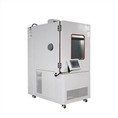


Products Description
The portable tensile testing machine uses an aviation-grade aluminum alloy body instead of the traditional cast iron structure. The equipment weight is generally controlled within 5kg to 30kg (depending on the load), and it can be carried or carried on the shoulder by one person - for example, the 10kN level portable device, its size is equivalent to that of a 20-inch suitcase, but it can accurately test medium and low-strength materials such as aluminum and copper. Some devices also support "modular assembly", and the testing fixtures can be quickly replaced, suitable for different forms of samples such as wires, plates, and tubes.
Products Description

At the construction sites of bridges and for the installation of reinforcing bars in high-rise buildings, the inspectors do not need to transport the reinforcing bar samples to the laboratory - the portable equipment can directly conduct tensile tests on HRB400 reinforcing bars and PC steel strands on the construction site, immediately determining whether the materials comply with the GB/T 228.1 standard, avoiding "sample transportation loss" or "delayed testing affecting the construction schedule". A construction enterprise reported that after using the portable equipment, the re-inspection efficiency of reinforcing bars increased by 60%, and the on-site rework rate decreased by 35%.
For scenarios such as the wire harness tensile testing in the auto parts factory, the connector insertion and extraction force testing in the electronics factory, and the film tensile strength verification in the packaging factory - where "on-the-spot testing" is required - portable tensile testers can be directly deployed next to the production line. The testing range covers 0.1kN to 50kN (applicable to various materials such as metals, plastics, and rubbers), and the test data is synchronously transmitted to the MES system in real time to prevent "unqualified products from flowing into the next process".


The flange bolts of the wind turbine towers and the aluminum alloy connectors of the photovoltaic supports are constantly exposed to the complex outdoor environment - the portable equipment has an IP54 level of dust and water resistance, and can operate stably within a temperature range of -10℃ to 50℃. The inspectors do not need to set up a temporary laboratory, and can complete the tests for the tensile strength of the bolts and the fatigue tests of the connectors, ensuring the long-term safe operation of the new energy projects.
In the outdoor practical training courses for mechanical and materials majors in colleges and universities, the portable tensile machine has become a "mobile laboratory": Students can test the tensile strength of different woods on the playground, compare the strength differences of concrete test blocks on the construction site, and combine the abstract "stress-strain curve" with the actual fracture process of real materials, significantly enhancing the practical teaching effect.

How to choose the right portable tensile testing machine for oneself?
Facing the wide variety of products in the market, users need to start from their "actual needs" and focus on three core indicators:
1. Load range: Matching material strength
Low load (0.1kN - 5kN): Suitable for lightweight materials such as electronic components, wires, and films;
Medium load (5kN - 20kN): Suitable for aluminum alloys, wood, and medium-strength steel;
High load (20kN - 50kN): Suitable for reinforcing bars, steel cables, and large bolts, etc., of high-strength materials.
2. Portability parameters: Focus on "weight + size"
Outdoor high-frequency mobility: Prefer equipment with a weight of less than 15kg and that can be carried by hand;
Fixed scene usage (such as beside the production line): Acceptable weight range is 20kg - 30kg, but it must support rolling movement.
3. Additional functions: Enhance usage efficiency
Environmental adaptability: For outdoor scenarios, select equipment with IP54 or higher protection and wide temperature operation;
Data transmission: For users of enterprise systems, prefer models that support 4G/5G or industrial Ethernet;
Clamping compatibility: Confirm whether the equipment provides "customized clamps" (such as special clamps for wires, special clamps for irregular parts), to avoid "buying the equipment but being unable to clamp the sample".
The portable tensile tester is moving towards "more intelligent and more specialized"
With the advancement of detection technology, portable tensile testing machines are presenting two new directions:
One is "intelligent upgrade": Some high-end devices have already incorporated AI algorithms, which can automatically identify the type of material, recommend testing parameters, and even capture the moment of sample fracture through cameras to assist in analyzing the cause of fracture;
The other is "industry customization": A "battery tab-specific portable machine" has been launched for the new energy industry, and a "sterile testing model for medical high-molecular materials" has been developed for the medical industry. The equipment functions are more in line with the needs of specific scenarios.
From the "fixed equipment" in the laboratory to the "testing companion" that can be deployed as needed, the value of portable tensile testing machines lies not only in "portability", but also in integrating "precise testing" into every key环节 of production, construction, and teaching. For users who need to control material performance in real time and improve testing efficiency, choosing a portable tensile testing machine that is adapted to their own scenarios is equivalent to having a "mobile material safety defense line" - after all, in today's era where efficiency and safety are equally important, "where testing is needed, the equipment goes there" has long become an industry consensus.
Parameters
|
Model |
BT-300B |
BT-600B |
BT-1000B |
||
|
Maximum test force(kN) |
300 |
600 |
1000 |
||
|
Accuracy level |
1 |
||||
|
Collection method |
Spoke load sensor |
||||
|
Piston stroke(mm) |
200 |
||||
|
Clamping method |
Hydraulic |
||||
|
Test control method |
Microcomputer servo control |
||||
|
Compression test space(mm) |
600 |
||||
|
Tensile test space(mm) |
700 |
||||
|
Total power(kW) |
1.5 |
||||
|
Compression platen(mm) |
Φ148 |
Φ198 |
Φ225 |
||
|
Round sample clamping range(mm) |
Φ10-30 |
Φ13-40 |
Φ13-40 |
||
|
Flat sample clamping range(mm) |
0-10 |
0-15 |
0-20 |
||
|
Bending fulcrum span(mm) |
50-300 |
||||
|
Bending heart / stick diameter(mm) |
50/50 |
||||
|
Number of columns (screws) |
6 column |
||||
|
Mainframe dimensions(mm) |
810*560*1910 |
880*570*2050 |
940*640*2250 |
||
|
Host weight(kg) |
≈1620 |
≈2000 |
≈2600 |
||
|
Control cabinet size(mm) |
1010*640*840 |
||||
|
Control cabinet weight(kg) |
150 |
||||
Hot Tags: portable tensile testing machine, China, suppliers, manufacturers, factory, buy, cheap


