




Preface
LED lighting technology, with its significant advantages such as energy saving and long lifespan, has been widely used in various lighting projects. However, for a long time, the industry has lacked unified quality standards, resulting in inconsistent product performance on the market. With the rapid popularization of LED lighting technology, relevant domestic and foreign institutions have successively introduced testing and evaluation standards for LED products, aiming to strengthen quality control and guide the orderly and healthy development of the industry.
High low temperature cycling test chamber have become indispensable reliability testing equipment. BOTO has focused on environmental testing equipment for over 20 years and can provide customized services according to customer requirements.
 Figure 1: Light source
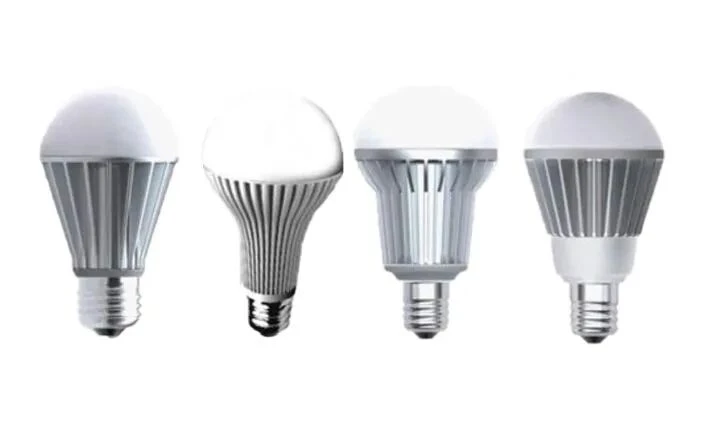 Figure 2: Light fixture
Current Status of International Standards Development
Currently, there is increasing global emphasis on standardization research in LED lighting technology. The National Institute of Standards and Technology (NIST) in the United States is actively deploying research on LED testing methods, striving to build a comprehensive LED testing standard system. Meanwhile, Japan has also established the "White LED Testing Research Committee," dedicated to developing testing methods and technical standards for white LEDs under high and low temperature environments, such as specifications for high low temperature cycling test chamber.
To seize the commanding heights of the global LED industry, developed countries have invested heavily in standard setting and testing technologies, focusing on the screening of LED characteristic parameters and the optimization of testing methods. Furthermore, the R&D departments of many large multinational corporations are deeply involved in relevant activities of their national and international standardization organizations, actively promoting the development of high and low temperature testing standards in the semiconductor lighting field, such as the technical requirements for LED high temperature and humidity test chambers.
Despite this, the International Commission on Illumination (CIE) and the International Electrotechnical Commission (IEC) have not yet issued independent standards specifically for LED lighting products. Existing standards mainly revolve around testing methods for ordinary LEDs and lighting specifications for traditional light sources. This indicates that the standardization process in the LED lighting field is still gradually improving and urgently requires more research investment and international cooperation. Currently accepted LED testing standards include:
IEC 60747-5 Semiconductor discrete devices and integrated circuits (1992)
IEC 5-2 Optoelectronic devices-Classification characteristics and elements (1997-09)
IEC 5-3 Optoelectronic devices-Test methods (1997-08)
IEC 12-3 Optoelectronic devices-Detailed blank standard for light-emitting diodes for display (1998-02)
CIE 127-1997 LED test methods (1997)
CIE/ISO LED intensity test standard
The CIE 127-1997 standard, published by the International Commission on Illumination (CIE) in 1997, first introduced the concept of average LED intensity and standardized the test structure and detector dimensions, laying an important foundation for accurate measurement and cross-sectional comparison of LED performance. Although this document is not a formal international standard, it has been adopted by many mainstream companies worldwide due to its ease of operation and reliable test results. However, with the rapid evolution of LED technology, CIE 127-1997 can no longer cover some newly emerging performance indicators, such as testing requirements under high and low temperature cycling conditions (high low temperature cycling test chamber) and high temperature and humidity conditions (constant temperature and humidity test chamber).
Meanwhile, Underwriters Laboratories Inc. (UL), the US product safety certification and standards organization, is also accelerating the development of safety assessment standards for LED products. Eli Puszkar, head of UL's lighting business, pointed out that to ensure that new LED lighting products can gain the same level of public acceptance and trust as traditional lighting, UL has initiated the development of relevant safety assessment specifications. During the product design and development phase, manufacturers must fully consider safety risks such as electric shock, fire, and physiological hazards and incorporate them into the product compliance design process.
Progress in the development of domestic standards
China possesses a massive lighting consumer market and a robust lighting industrial base, making it one of the world's major production bases and exporters of electric light sources and lighting fixtures. The application of LED light sources in road lighting is gradually becoming an important development direction for the semiconductor lighting industry. Currently, over a hundred companies both domestically and internationally have invested in the research and development of semiconductor streetlights, but most are still in the small-batch or trial production stage and have not yet achieved large-scale production. Technological bottlenecks have not been fully overcome, and the product standard system is still incomplete, which have become key factors restricting the large-scale promotion of LED streetlights.
BOTO is dedicated to providing comprehensive and professional reliability testing equipment for LED light sources and LED luminaires, covering product performance testing and reliability verification needs. We can also tailor testing solutions to meet the specific testing requirements of different products, offering a one-stop service.
Testing standards for LED light sources and LED luminaires involve numerous items, aiming to comprehensively evaluate the performance stability and environmental adaptability of products. Main test types include, but are not limited to:
High-temperature aging tests: such as LED high and low temperature aging chambers, LED light source high-temperature aging tests, LED luminaire high-temperature aging, etc.
Temperature and humidity cycling tests: such as LED light source high low temperature cycling test chamber, LED luminaire high and low temperature tests, LED high-temperature and high-humidity tests, LED damp heat aging tests, LED high and low temperature damp heat tests, etc.
Thermal shock tests: such as LED luminaire thermal shock tests, LED light source high and low temperature shock tests, etc.
Constant temperature and humidity tests: such as LED constant temperature and humidity tests, LED temperature and humidity tests, etc.
Environmental corrosion and aging tests: such as LED ultraviolet aging tests, LED salt spray corrosion tests, etc.
Mechanical stress tests: such as LED luminaire vibration tests, LED drop tests, LED packaging transportation compression tests, etc.
BOTO can provide corresponding testing equipment and overall solutions based on relevant standards and specific customer needs, helping to improve the quality and market competitiveness of LED products.