

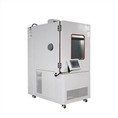


Products Description
The compact temperature test chamber is a small test equipment designed to accurately simulate different temperature environments. It integrates efficient temperature control functions into a compact housing structure. Made of high quality materials. The housing is usually made of sturdy metal, which provides good protection and helps to dissipate heat. The interior is filled with high-quality insulation materials, such as high-density polyurethane foam, which effectively reduces heat conduction and loss, creating a stable temperature environment for the box. The internal space layout is compact but reasonable, with flexible sample shelves to accommodate different shapes and sizes of test samples, to maximize the use of limited space. In terms of temperature control mechanism, It has a sophisticated system. It uses high-precision temperature sensors that are able to monitor temperature changes inside the box in real time with extreme sensitivity and accuracy up to ±0.1°C and beyond. This is matched by an advanced temperature controller that uses sophisticated algorithms to fine-tune heating and cooling systems. The heating system mainly adopts efficient electric heating elements, which can quickly respond to the heating demand; The refrigeration system selects the appropriate method according to the desired temperature range, such as compressor refrigeration or semiconductor refrigeration, to achieve precise temperature control. Users can easily set a variety of temperature modes according to test requirements, including linear heating, cooling and constant temperature maintenance.

Application field
The compact temperature test chamber has a wide range of applications:
It plays an indispensable role in the development, production and quality inspection of electronic products. For example, key components such as chips and circuit boards of consumer electronics such as mobile phones, tablets and laptops need to be tested in different temperature environments. The high temperature environment test can detect whether the electronic products will have performance degradation, crash, component damage and other problems due to overheating during long-term use or high load operation; The low-temperature environment test can simulate the use of cold areas, and check whether the product has cold start difficulties, abnormal screen display, reduced battery life or data loss.
Many parts in the automotive industry also rely on it for performance verification. For example, the electronic control unit (ECU) of the automobile engine, various sensors and small interior parts. By simulating the operation state of the car in extreme temperature environments, such as high temperature desert driving or low temperature polar starting, to ensure that these parts can work properly under different temperature conditions, thereby improving the overall reliability and safety of the car.
In the development process of drugs, it can be used to evaluate the stability of drugs at different temperatures. Different pharmaceutical ingredients have different sensitivity to temperature, and by testing under simulated different temperature environments, the effective storage conditions and shelf life of the drug can be determined to ensure the quality and efficacy of the drug during transportation, storage and use.
For the preservation and study of biological samples, such as cells, microorganisms, enzymes, etc., precise temperature control is essential. It can provide a stable and accurate temperature environment, ensure the activity of biological samples, and provide reliable conditions for biological experiments, thus ensuring the accuracy of experimental results.
Materials scientists use it to test changes in the physical and chemical properties of new materials at different temperatures. Whether it is polymer material, composite material or metal material, it is necessary to study the law of thermal expansion coefficient, hardness, elastic modulus, chemical activity and other changes with temperature. Through the acquisition of these data, it can provide a key basis for the expansion of the application range of materials, performance improvement and new product development.
Cleaning and maintenance
The use of compact temperature test chambers requires regular cleaning:
External cleaning
Wipe the shell of the test chamber regularly with a clean and soft cloth to remove dust, stains and other impurities. If there are stubborn stains on the shell, you can use a mild detergent to wipe, but pay special attention to avoid the detergent flowing into the box, so as not to damage the internal parts.
Internal cleaning
It is also necessary to clean the debris and dust in the box regularly. Focus on the area around the sample holder and temperature sensor, as dust accumulation in these places can affect the accuracy of the temperature sensor and the stability of the sample placement. If a sample spills or produces other contaminants during the test, it should be cleaned up in time.
Equipment parameter
|
Inner tank volume |
49L |
|
Inner box size |
40cm*35cm*35cm |
|
Low temperature range |
-10~-60°C |
|
High temperature range |
+80~+200°C |
|
Test temperature range |
-40~+150°C |
|
Recovery time |
3~5 minutes |
|
Temperature fluctuation |
±2°C |
|
Temperature uniformity |
±2°C |
Hot Tags: compact temperature test chamber, China, suppliers, manufacturers, factory, buy, cheap


